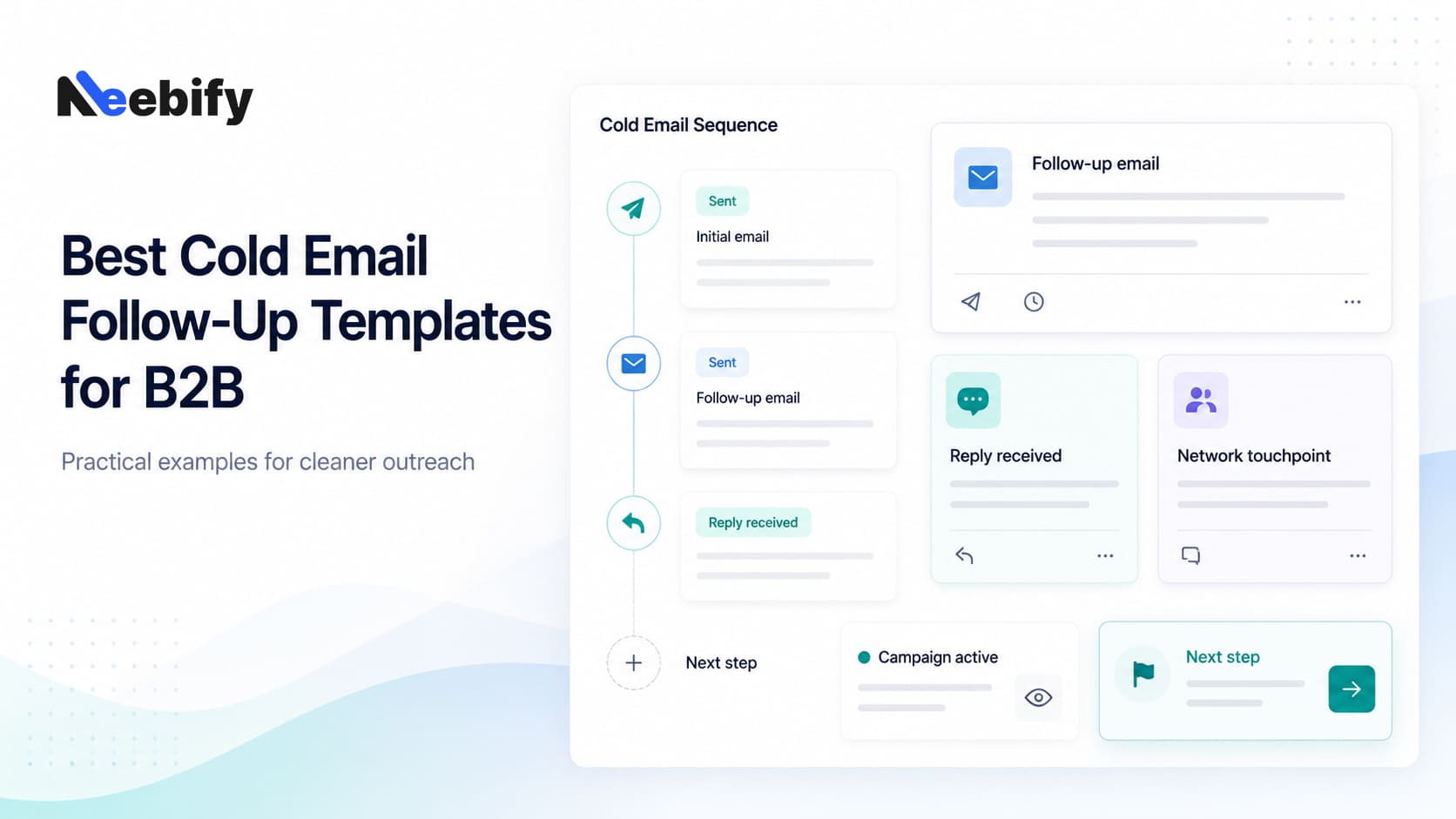
Best B2B cold email follow-up templates with examples, use cases, and cleaner outreach workflows.
By Neebify Editorial Team · Updated Jul 9, 2026
Best Cold Email Follow-Up Templates for B2B
Most B2B teams do not need more follow-up templates. They need better reasons to use them.
That is the real difference between a follow-up that keeps a conversation moving and one that simply creates repeated activity.
The best cold email follow-up templates for B2B are not just short messages you can paste into a sequence. They are templates built for specific situations, clear timing, and a more organized outreach workflow.
This guide explains which follow-up templates work well for B2B outreach, when to use them, and how to connect them to a cleaner email and LinkedIn process.
Why many cold email follow-up templates feel generic
A lot of follow-up sequences rely on one habit: repeating the same ask with slightly different wording.
That may keep a campaign moving, but it rarely makes the conversation stronger. Prospects respond better when the follow-up gives them a new reason to engage.
That can mean:
A clearer explanation
A different angle
A more specific use case
A lower-friction next step
A respectful close-the-loop message
The goal of a B2B follow-up is not simply to remind someone that you exist. It is to make the outreach more relevant while keeping the process manageable for the team.
The real reader situation
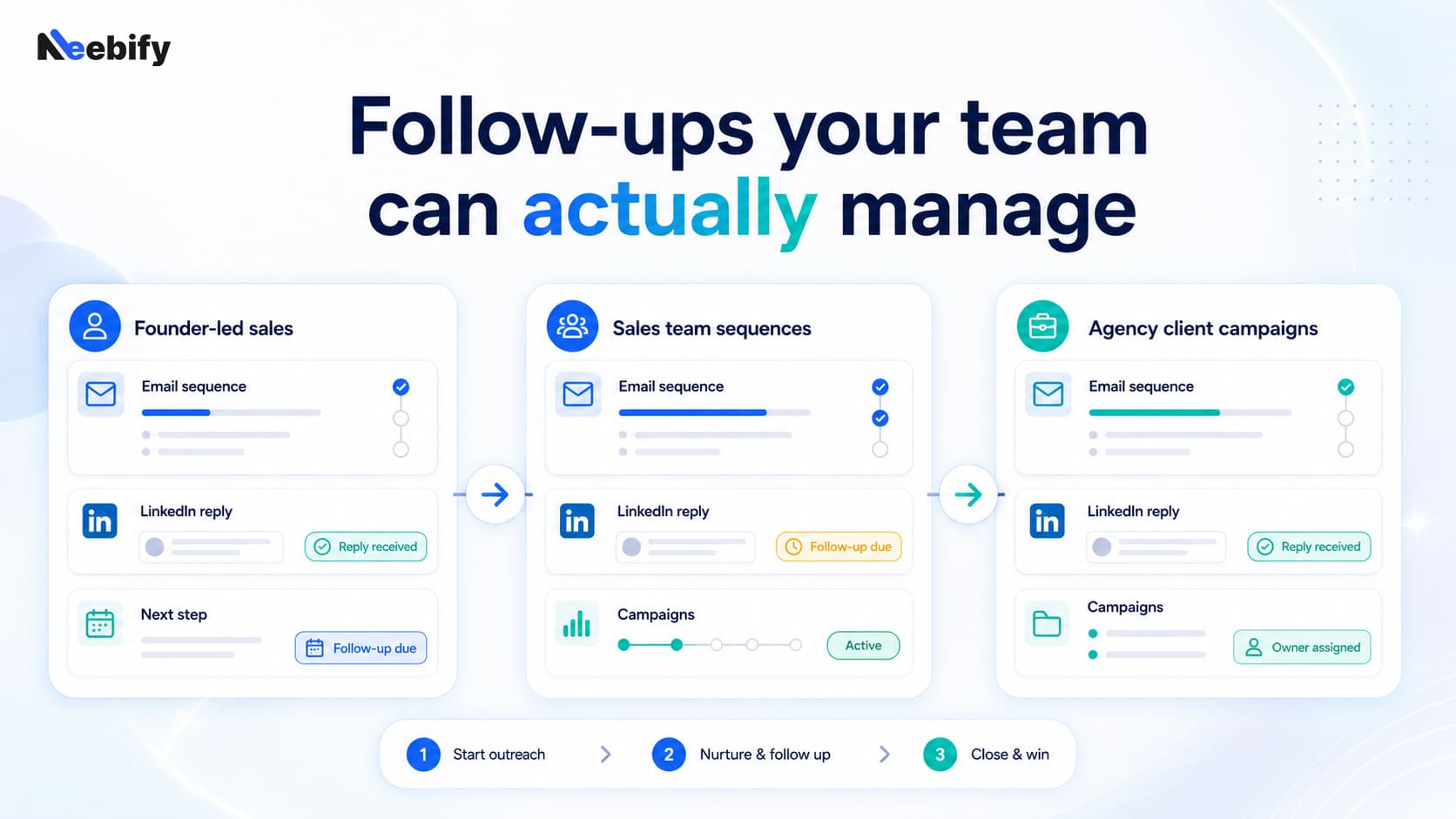
A founder running founder-led sales may write a strong first email and then run out of time to craft good follow-ups. A sales team may automate follow-ups successfully, but every sequence starts sounding the same after the first touch. An agency may need multiple follow-up templates across client campaigns, but without a structure those templates become repetitive or hard to review.
In each case, the team wants follow-ups that are easy to use, relevant to the audience, varied enough to avoid repetition, clear enough to review later, and connected to reply signals and next steps.
That is why cold email templates are most useful when they are tied to workflow logic.
What makes a B2B follow-up template useful
A useful follow-up template does not try to do everything at once. It does one job clearly.
One follow-up may restate the original reason for reaching out. Another may add a practical use case. Another may lower the pressure of the ask. Another may close the loop politely.
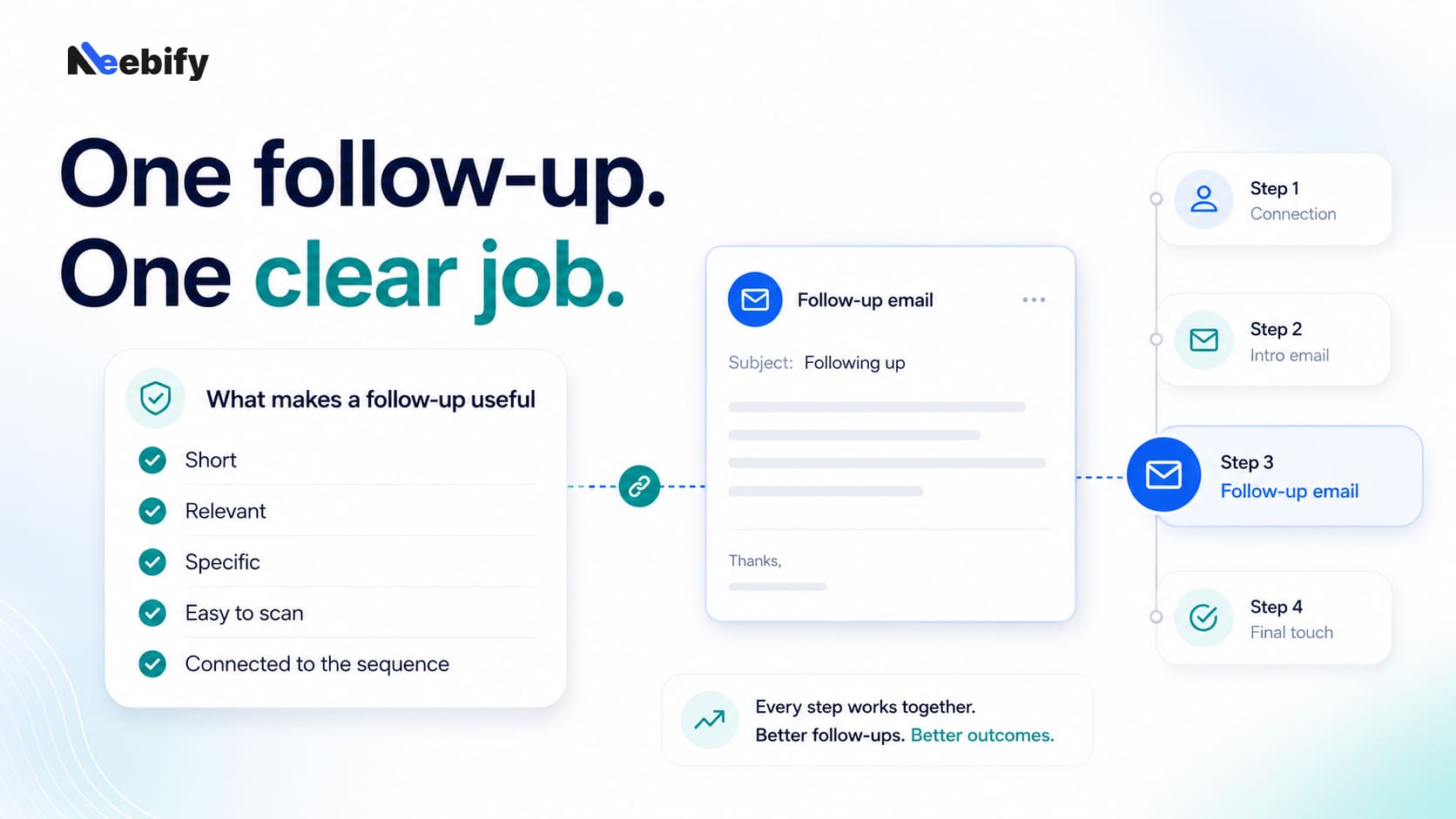
The strongest templates usually share a few traits:
They are short enough to scan quickly
They sound written for a real business context
They avoid repeating the same sentence structure every time
They give the prospect a simple reason to continue the conversation
They fit naturally into a broader outreach sequence
The Follow-Up Template Selection Framework
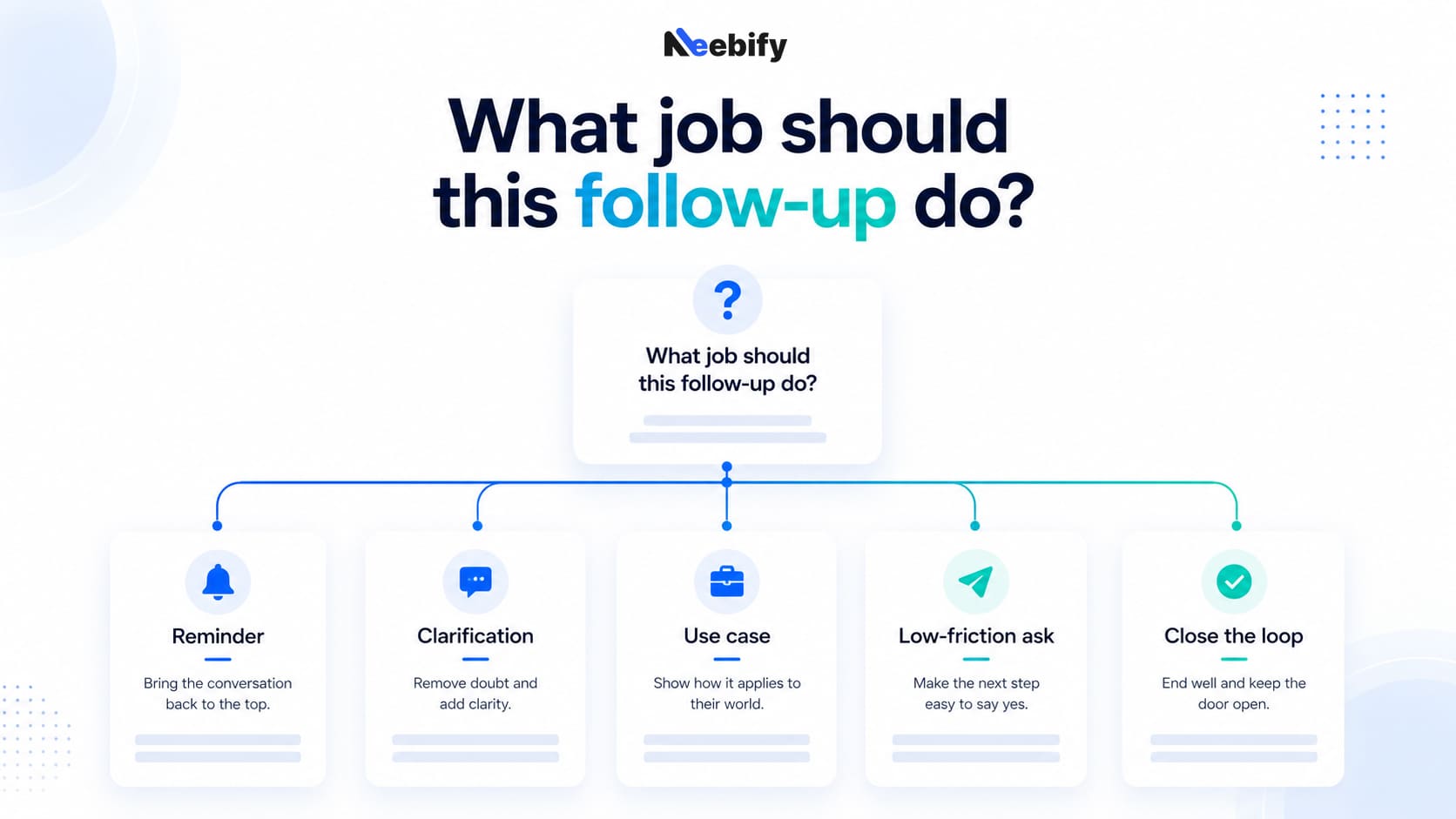
Before choosing a template, ask one question: what job should this follow-up do?
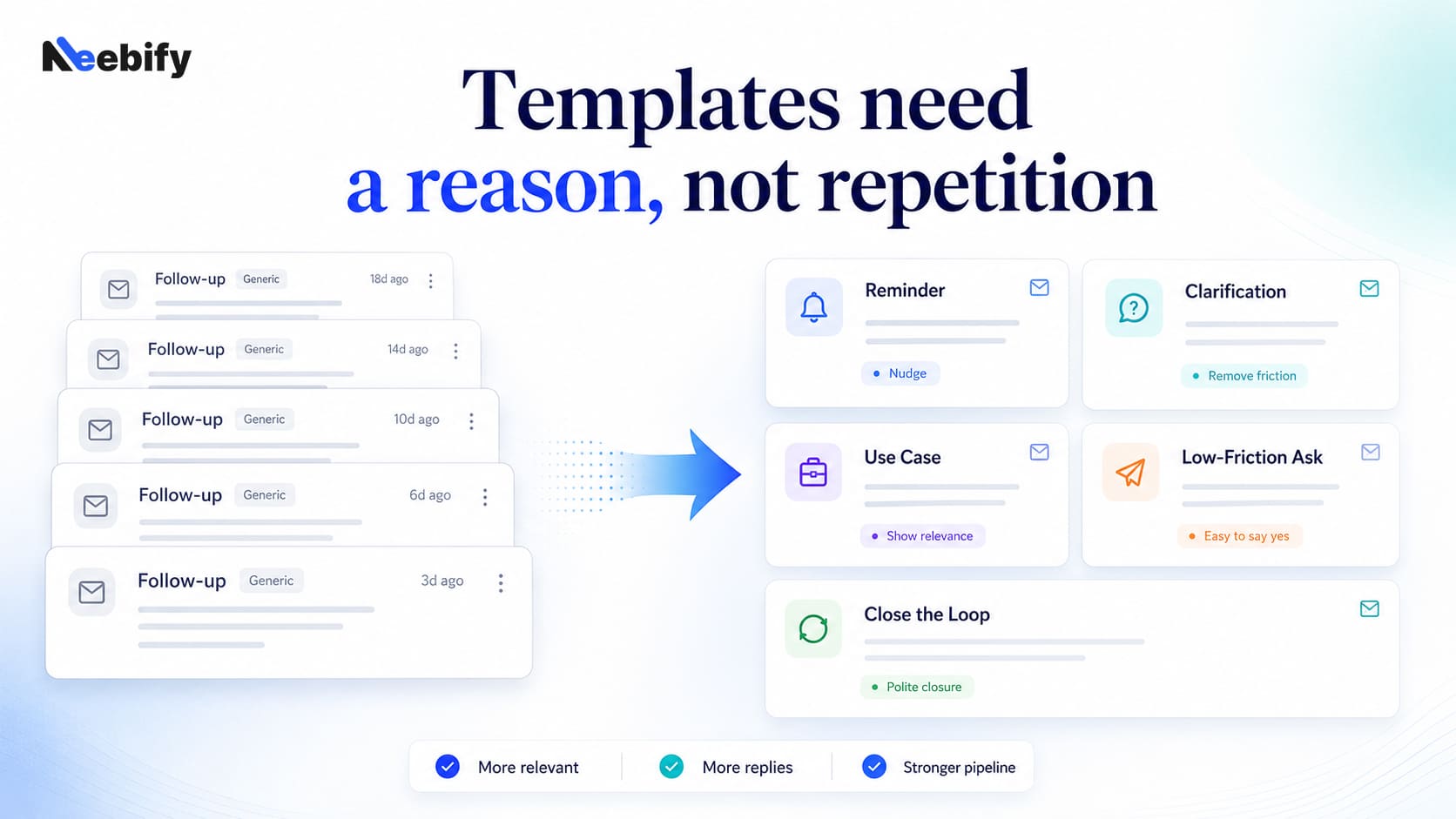
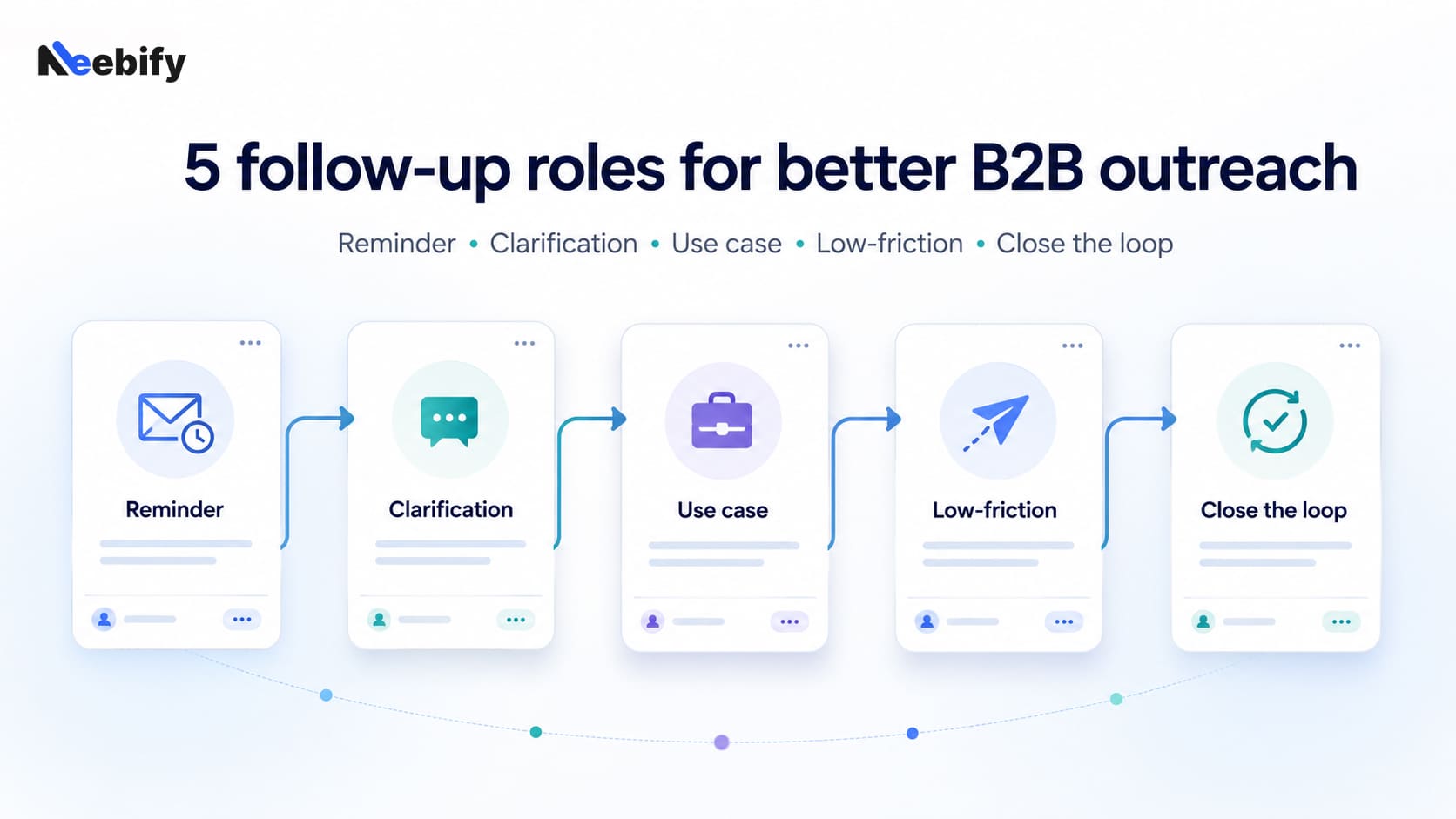
A strong cold email follow-up usually fits one of these roles:
Reminder follow-up: used when the first message was clear and the team simply needs a polite second touch.
Clarification follow-up: used when the first email may need a sharper explanation or clearer context.
Use-case follow-up: used when the prospect may respond better to a specific operational example.
Low-friction follow-up: used when the current ask feels too large and the team wants to reduce pressure.
Close-the-loop follow-up: used when the sequence should end respectfully while leaving room for future timing.
When each follow-up has a role, the sequence becomes easier to manage and easier to improve.
Best cold email follow-up templates for B2B
1. Simple reminder follow-up
Best for: first follow-up after an initial cold email, strong-fit prospects, and short sequences that need a clean second touch.
Template:
Hi [First Name],
Wanted to follow up on my earlier note in case the timing was busy.
I reached out because [short reason tied to audience or use case]. If this is relevant on your side, happy to share a quick outline of how teams usually approach it.
Best, [Your Name]
Why it works: This follow-up is light, easy to scan, and does not pretend the prospect missed something important. It simply reopens the conversation respectfully.
2. Clarification follow-up
Best for: second follow-up, situations where the first email may have been too broad, and offers that need clearer business context.
Template:
Hi [First Name],
To make my earlier note more specific, I’m reaching out to [role or team type] who want to improve [clear workflow outcome].
In your case, I thought this might be relevant because [short observation or segment reason].
If helpful, I can send a short example of how this is usually structured.
Best, [Your Name]
Why it works: Instead of repeating the first ask, this version sharpens the message and makes the relevance easier to understand.
3. Use-case follow-up
Best for: middle of the sequence, B2B SaaS and agency outreach, and prospects who respond better to a practical example.
Template:
Hi [First Name],
One reason I thought this could be relevant is that teams often use it to improve [specific workflow outcome], especially when they want more visibility into [process area].
That may or may not be a priority for you right now, but I wanted to share the use case in case it is timely.
Best, [Your Name]
Why it works: This template adds something new. It moves the conversation from general outreach to a more practical business scenario.
4. Low-friction ask follow-up
Best for: sequences where the original CTA may have felt too heavy, smaller teams that want a softer next step, and prospects who may be interested but not ready for a meeting.
Template:
Hi [First Name],
Instead of asking for time right away, I’m happy to send a short breakdown of how teams approach [use case] if that is easier.
If it is not relevant at the moment, no problem at all.
Best, [Your Name]
Why it works: This reduces pressure and makes it easier for the prospect to engage without committing to a meeting immediately.
5. Short bump follow-up
Best for: very short sequences, concise audiences, and late-stage follow-ups that should not restart the conversation from scratch.
Template:
Hi [First Name],
Bumping this in case it is relevant on your side.
Happy to share more context if useful.
Best, [Your Name]
Why it works: This is intentionally minimal. It works best when the earlier message was already clear and the team wants one quick extra touch.
6. Close-the-loop follow-up
Best for: final email in the sequence, respectful sequence endings, and keeping the door open without adding pressure.
Template:
Hi [First Name],
I’ll close the loop here for now.
If improving [workflow area] becomes more relevant later, I’d be happy to reconnect. Either way, thanks for taking a look.
Best, [Your Name]
Why it works: This gives the sequence a clean ending. It respects the prospect’s attention and keeps future timing open.
How to turn templates into a real sequence
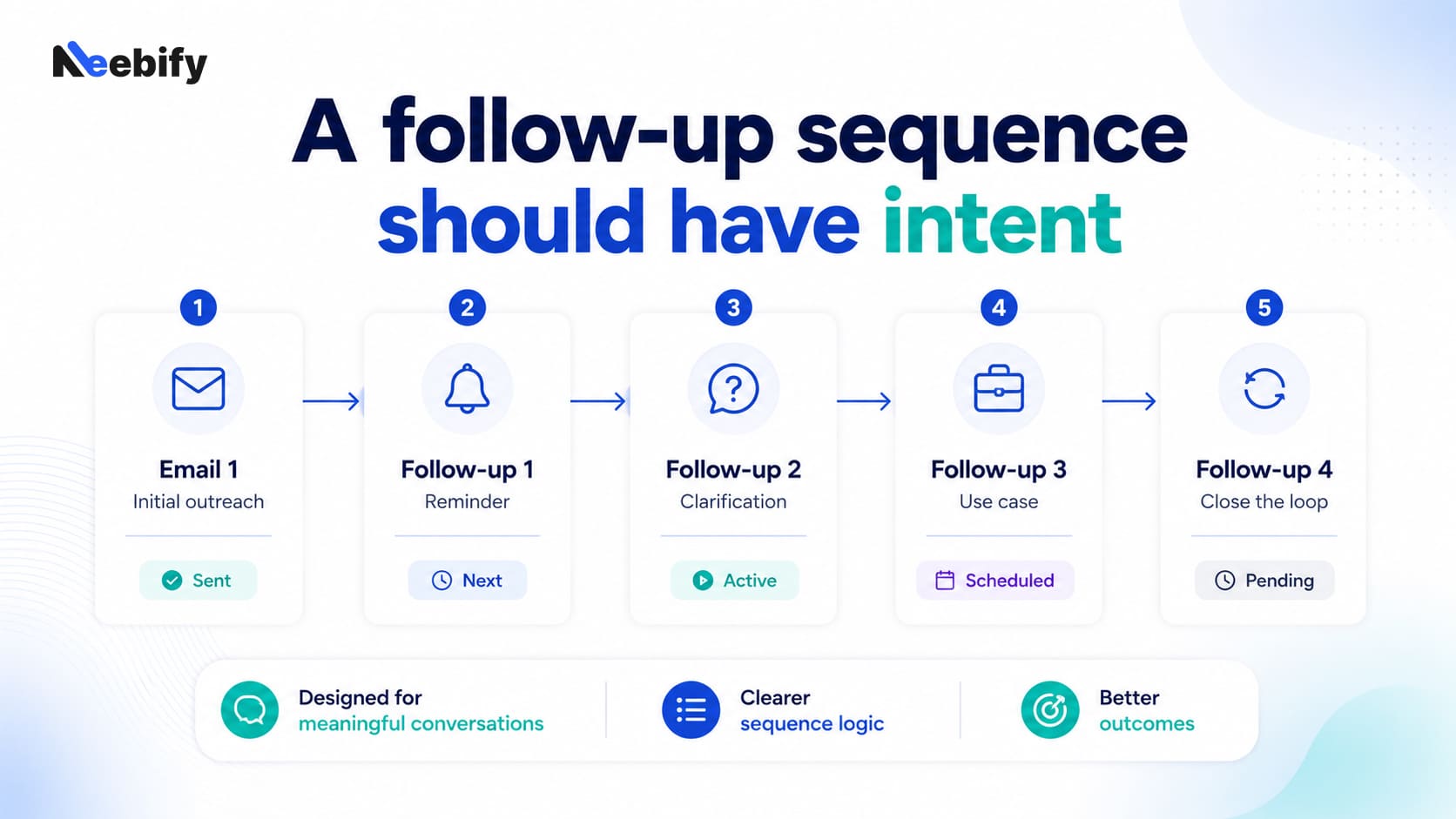
Templates work better when they are sequenced with intent. A simple example looks like this:
Email 1: initial outreach
Follow-up 1: simple reminder
Follow-up 2: clarification follow-up
Follow-up 3: use-case follow-up
Follow-up 4: low-friction ask or close-the-loop message
This creates variation without making the sequence feel random. Each message has a job, and the sequence becomes easier to review later.
How LinkedIn should support these follow-ups
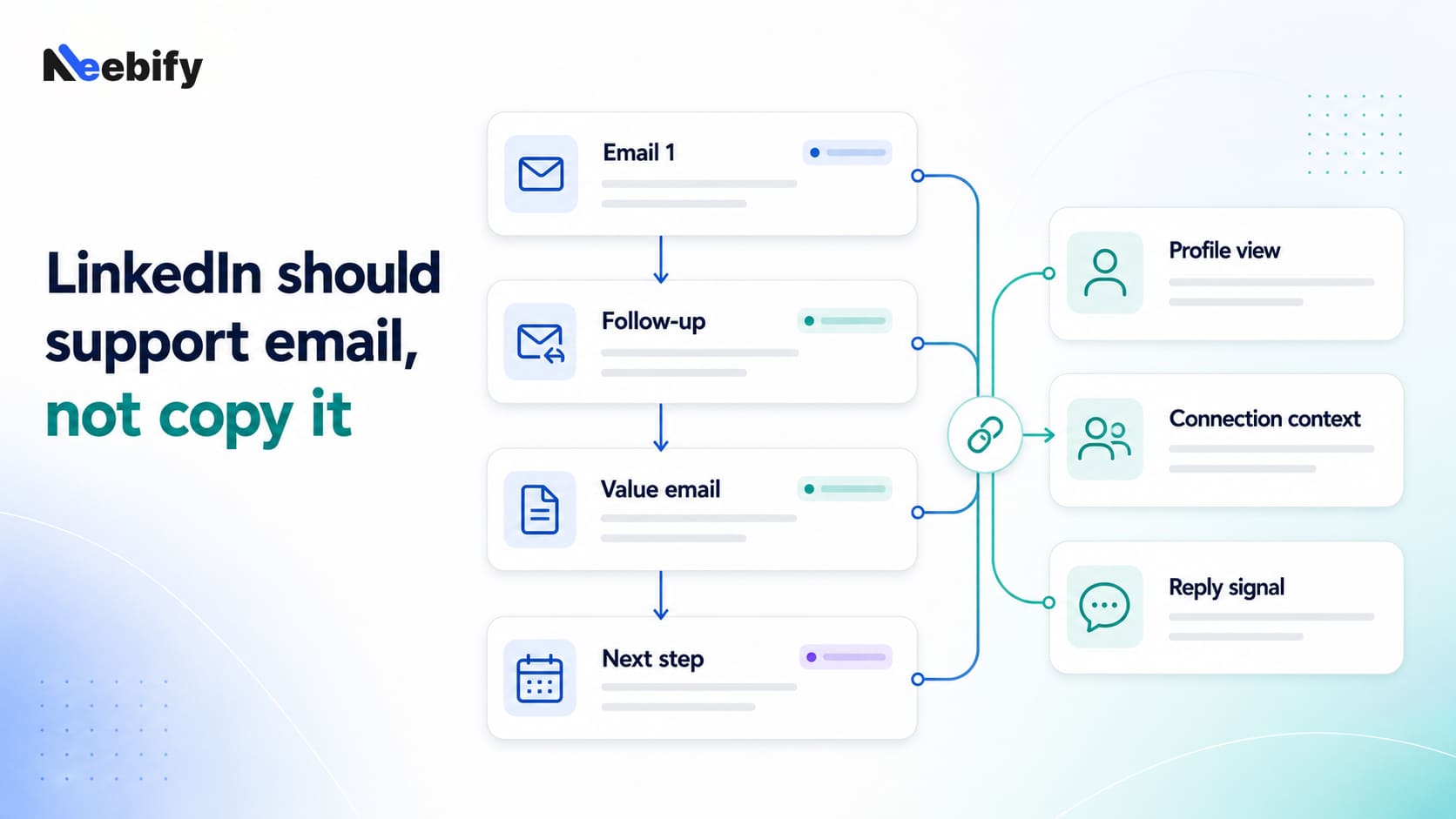
If your team uses LinkedIn as part of the workflow, LinkedIn should support the sequence rather than mirror it.
Do not paste the same email into LinkedIn
Do not message on LinkedIn every time an email follow-up goes out
Do not keep automated follow-ups active after a meaningful reply in either channel
A simple approach is to let email carry the main sequence and use LinkedIn for light visibility, connection context, or a short supporting touch.
How to manage replies and next steps more clearly
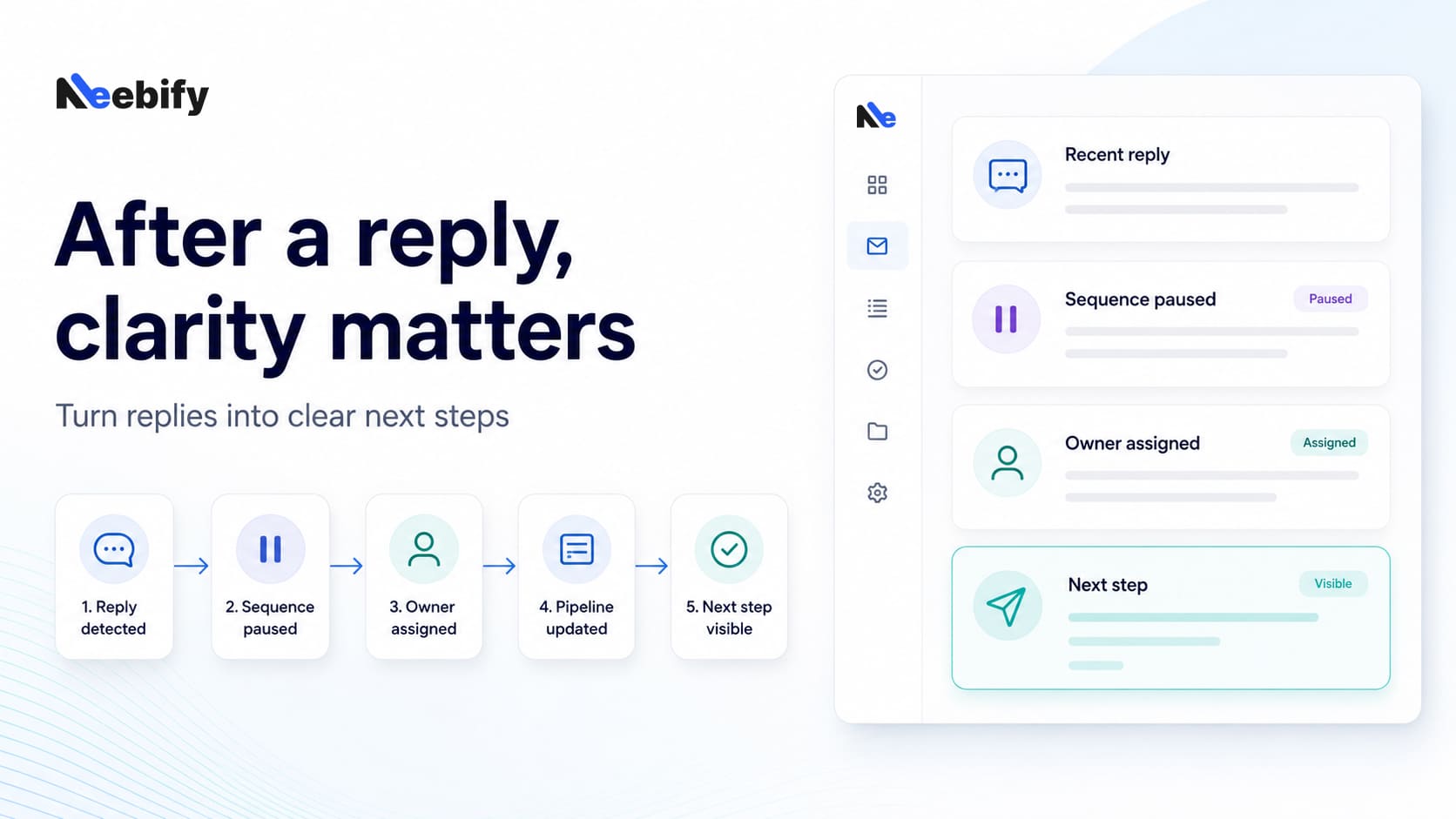
The more templates and channels a team uses, the more important reply management becomes.
A prospect may answer the second email while a third follow-up is already queued. A rep may get a LinkedIn reply while another teammate still thinks the prospect is inactive.
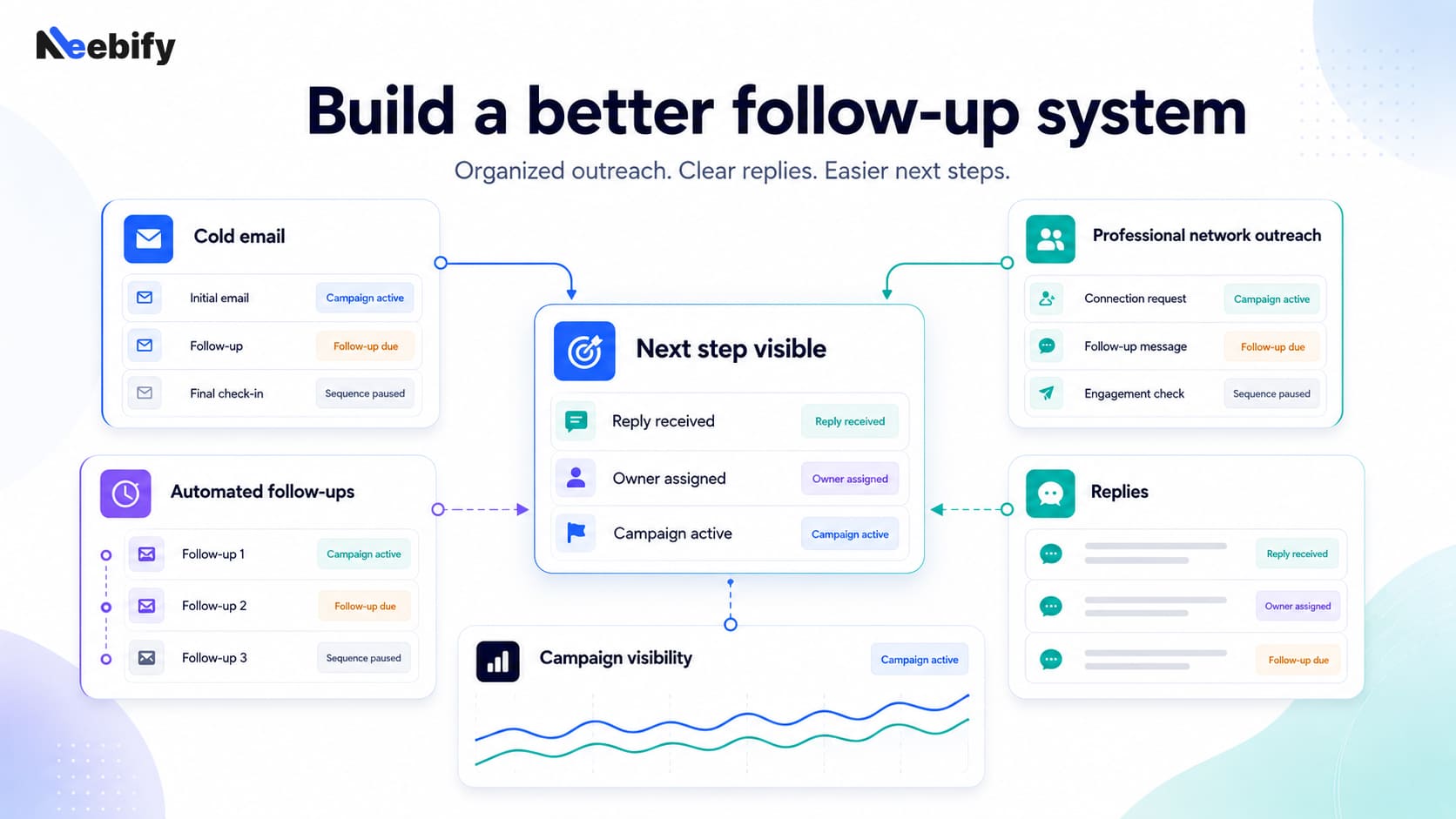
That is why a cleaner outreach workflow should connect:
Prospect status
Follow-up timing
Reply detection
Ownership and handoff
Campaign analytics
Neebify fits naturally here because it helps teams manage cold email campaigns, LinkedIn outreach, automated follow-ups, replies, and campaign visibility in one outreach system.
That makes it easier to use templates consistently without losing context across the sequence.
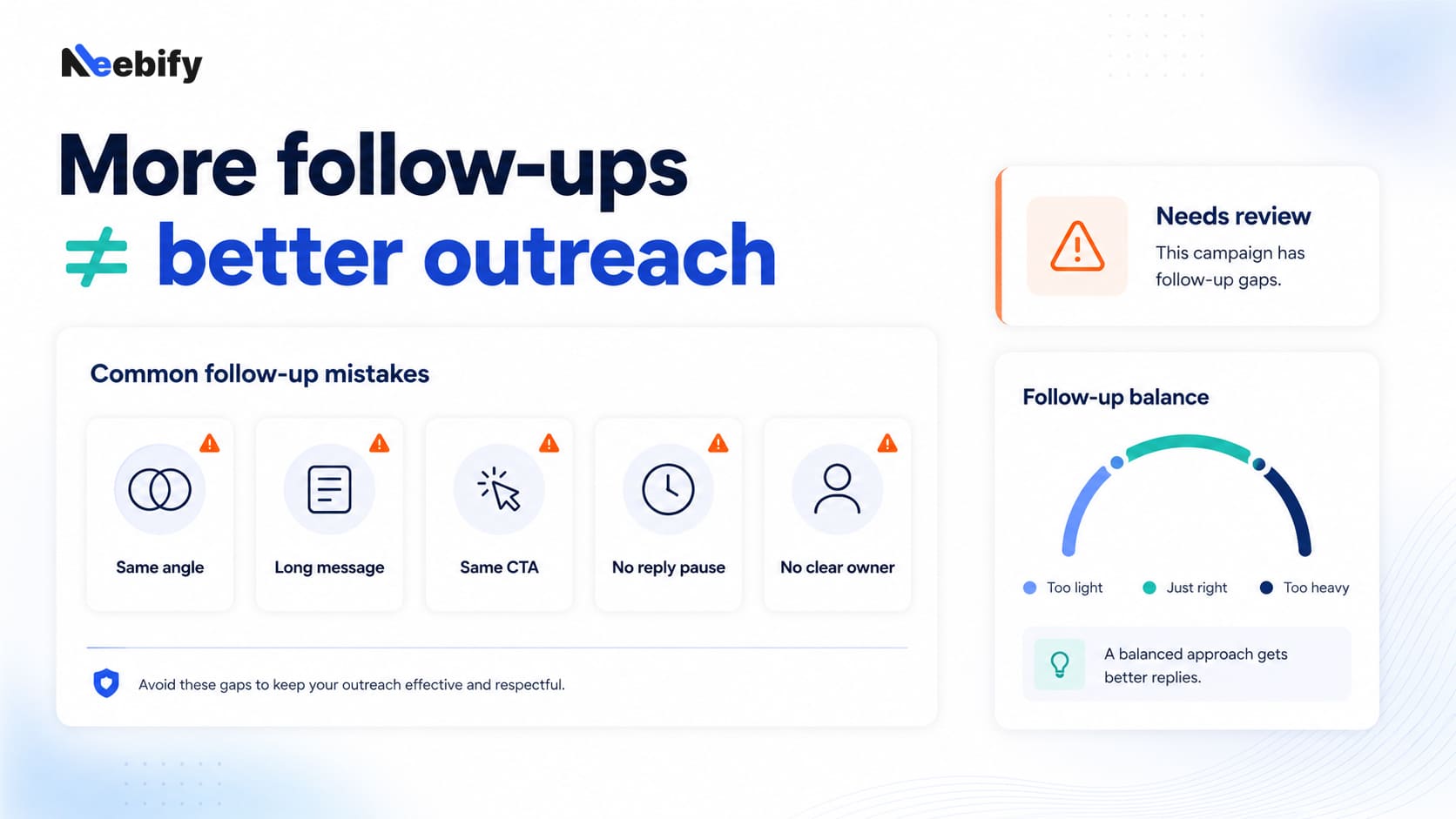
A few template mistakes worth avoiding
Templates become less useful when teams rely on them without review. A few habits usually reduce quality quickly:
Sending every follow-up with the same angle
Using long paragraphs that are hard to scan
Treating more follow-ups as a substitute for relevance
Keeping the same CTA in every message
Using a template without matching it to the situation
The goal is not to find one perfect template. The goal is to build a better follow-up system.
Practical framework
Follow-Up Template Selection Framework
Decide what job the next follow-up needs to do.
Choose a template role that matches that goal.
Keep the message short and easy to scan.
Add one new reason to engage instead of repeating the same ask.
Reduce pressure when the original CTA feels too large.
Pause the sequence when a meaningful reply appears.
Review template performance based on conversation quality, not just send volume.
End the sequence clearly when it has already done its job.
Actionable checklist
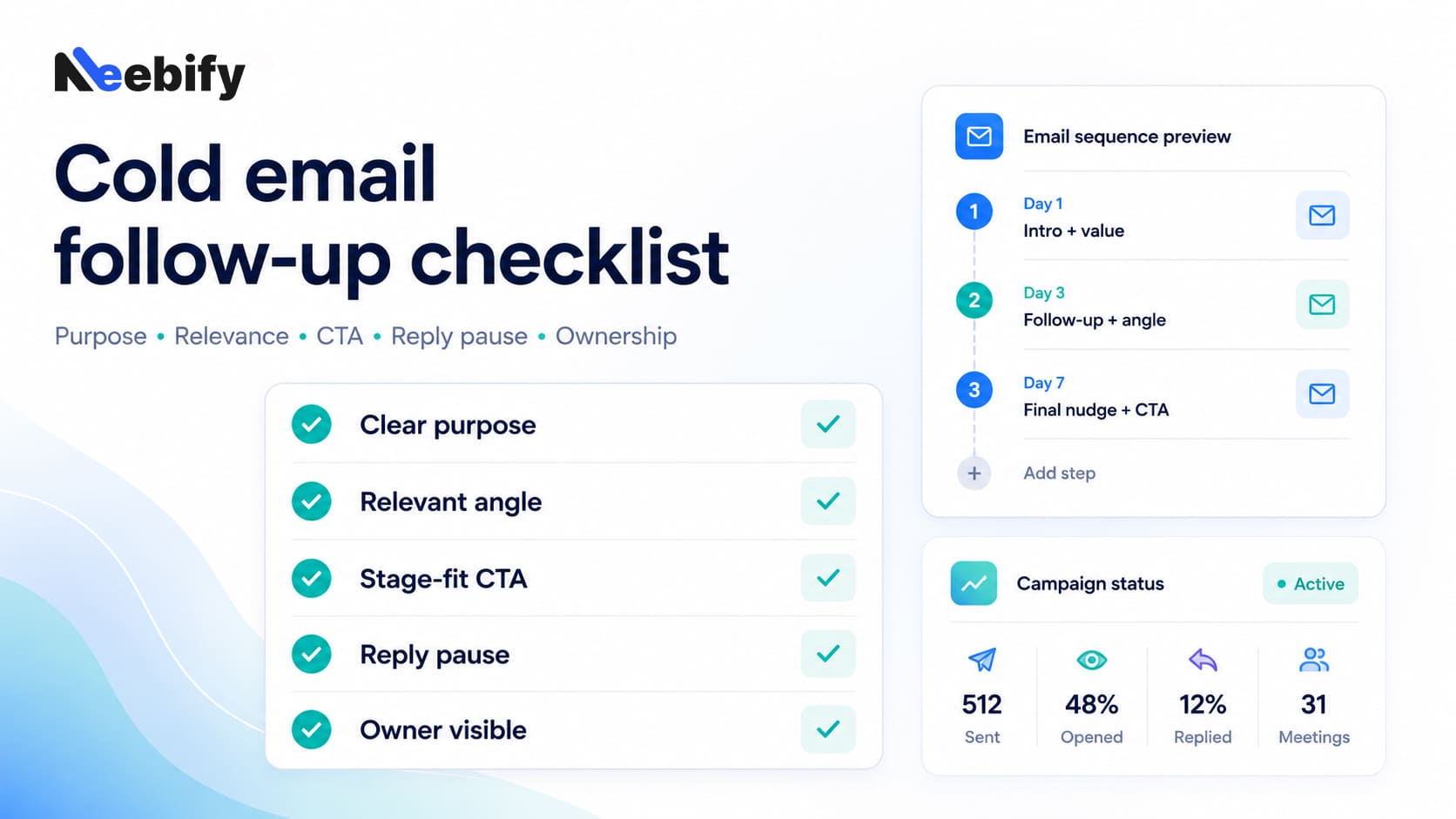
Before using a cold email follow-up template, check:
Does this follow-up have a clear purpose?
Is the message different from the previous email?
Is the email short enough to scan quickly?
Does it sound relevant to one audience segment?
Is the CTA appropriate for this stage of the sequence?
Will a reply pause the next automated step?
Can the team see who owns the next conversation?
Is the follow-up improving clarity rather than just increasing activity?
Is LinkedIn being used as support instead of duplication?
Is there a respectful final message in the sequence?
Conclusion
The best cold email follow-up templates for B2B are the ones that fit a specific role inside the sequence.
When teams use reminder, clarification, use-case, low-friction, and close-the-loop follow-ups intentionally, they create more relevant prospect conversations and a cleaner outbound workflow.
If your team wants more organized outreach, better follow-up visibility, and easier reply management across cold email and LinkedIn, Neebify is worth reviewing.
CEO Notes
Useful because it solves a common B2B outbound problem with practical templates, gives readers a clear decision framework instead of generic copywriting advice, and reinforces Neebify’s positioning around organized follow-ups, reply visibility, and multi-channel workflow control.
Ready to build cleaner pipeline?
Turn your next prospect list into more qualified conversations.