
Best LinkedIn Outreach Workflow for B2B Sales Teams
Learn how B2B sales teams can build a better LinkedIn outreach workflow with clearer prospecting ste
By Neebify Editorial Team · Updated Jul 1, 2026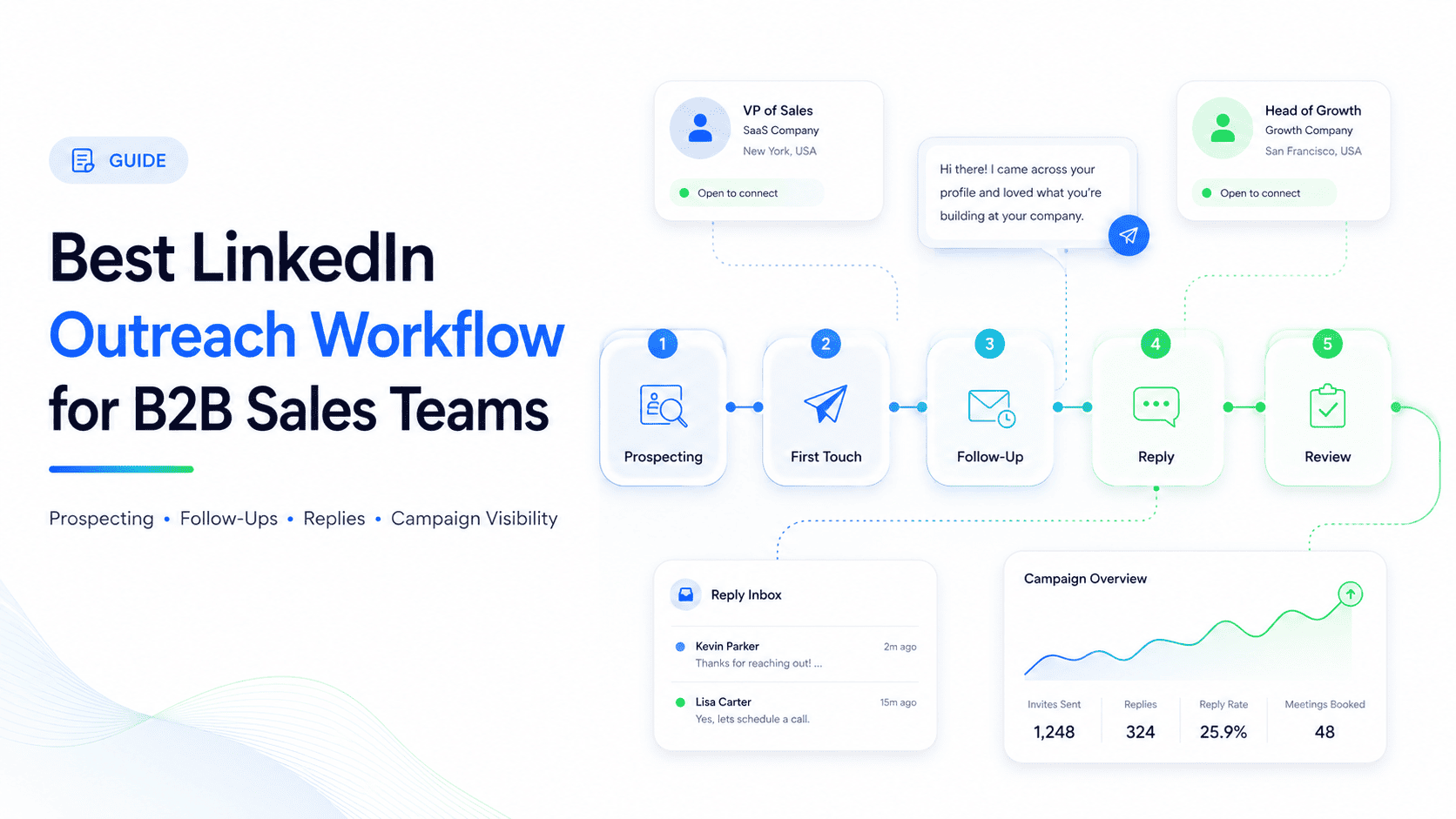
Best LinkedIn Outreach Workflow for B2B Sales Teams
Most B2B teams do not need more LinkedIn activity. They need a clearer way to manage who they contact, what message gets sent, who replied, and what should happen next.
That is the difference between doing LinkedIn outreach and building a LinkedIn outreach workflow.
When the workflow is clear, teams can prospect more consistently, manage replies with less confusion, and review campaigns with more confidence.
This guide explains the best LinkedIn outreach workflow for B2B sales teams and how to keep it manageable as volume grows.
The reader situation: LinkedIn outreach is working, but it feels scattered
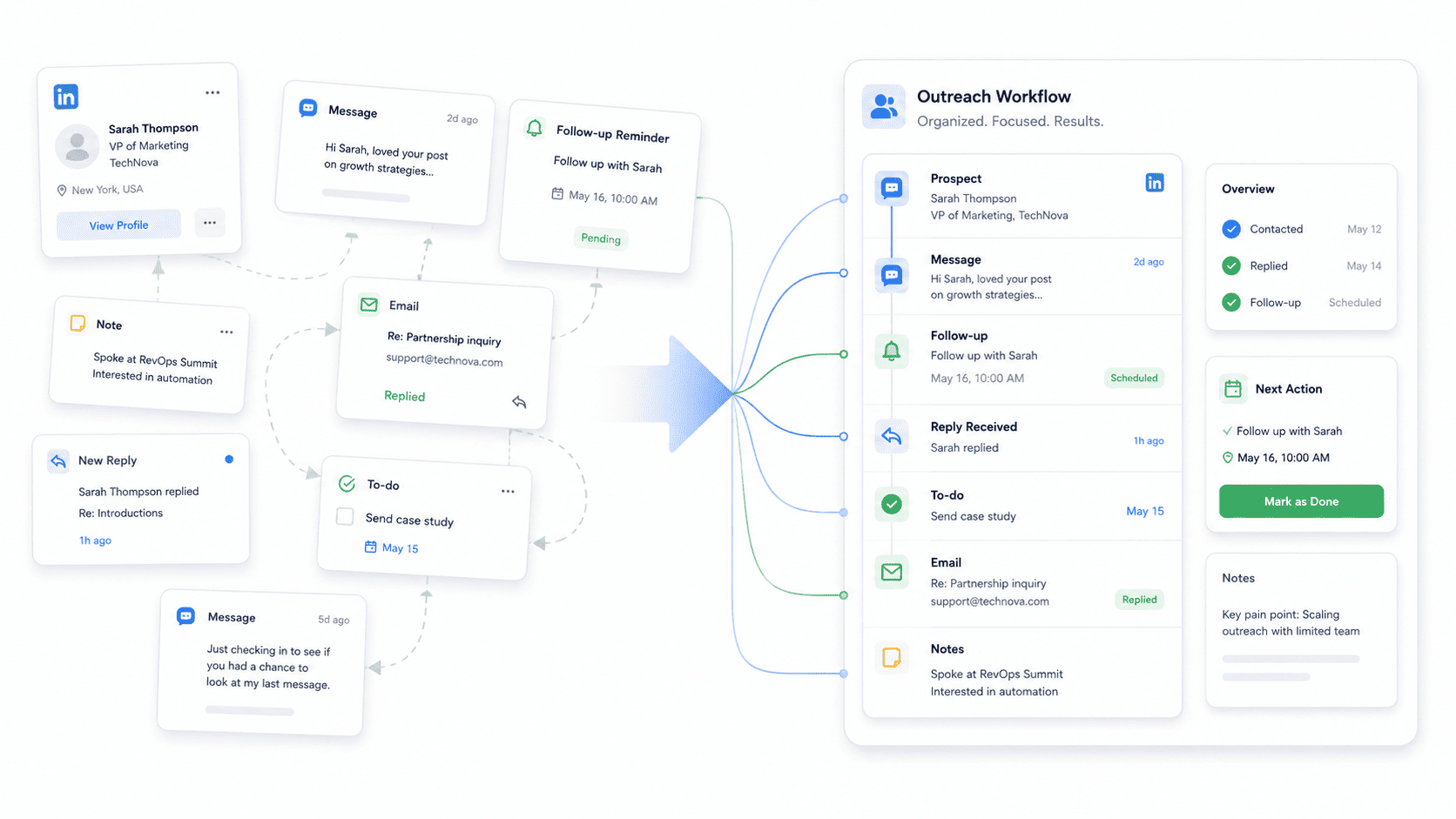
A founder may send connection requests between demos. A sales rep may handle follow-ups manually. An agency may run multiple client campaigns at once. A recruiter may be trying to keep candidate replies organized across active conversations.
In each case, the workflow starts to feel fragmented. Prospects are in one place. Messages are in another. Reply handling depends on inbox checking. Follow-ups live in memory, notes, or spreadsheets.
That is usually when outreach begins losing consistency.
Why this topic matters
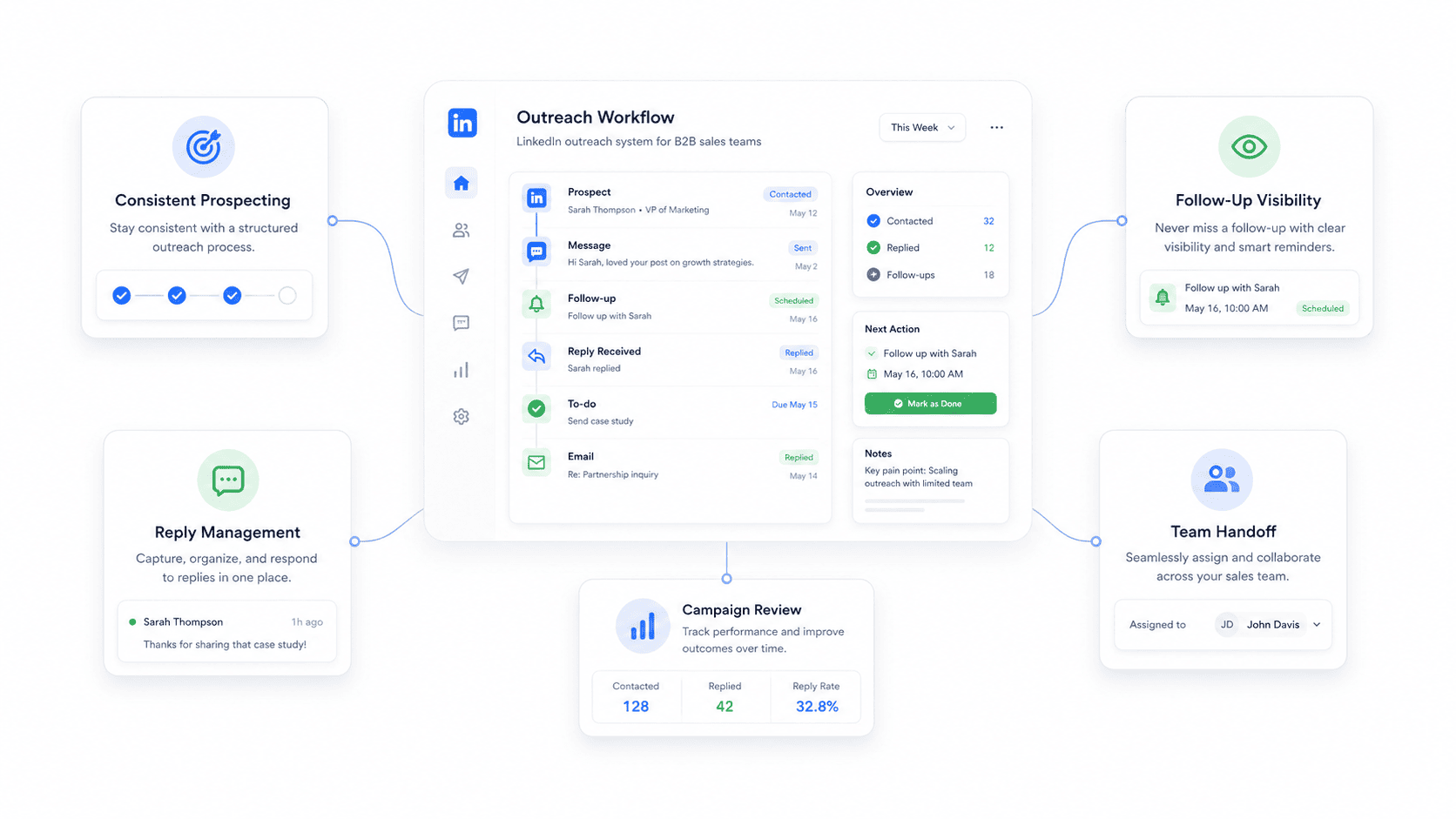
A clearer workflow helps teams:
- Keep prospecting consistent
- Improve follow-up visibility
- Make replies easier to manage
- Support smoother team handoffs
- Review campaign quality with more clarity
Workflow design matters just as much as message quality.
What the best LinkedIn outreach workflow looks like
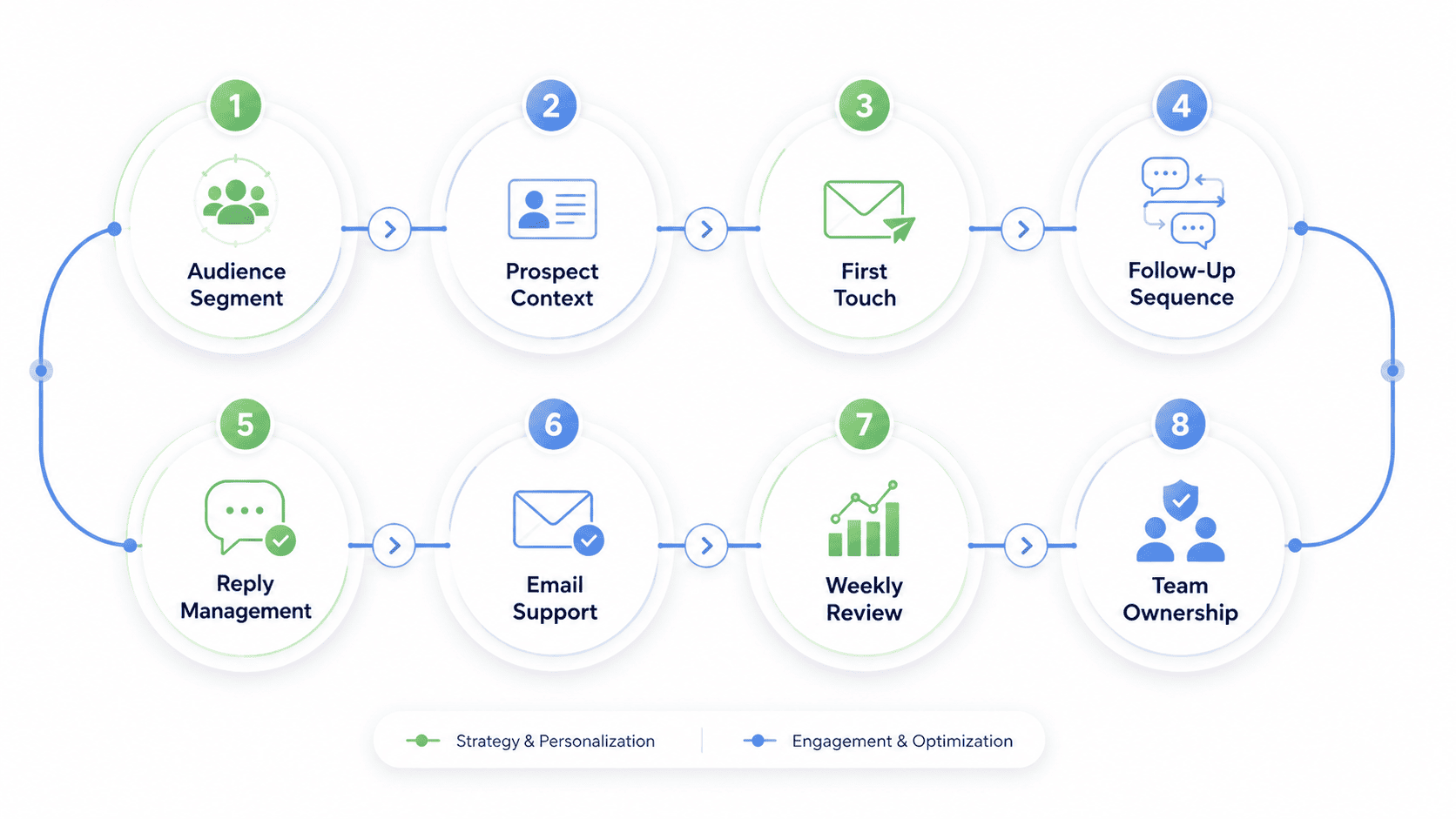
1. Define one audience segment first
Start with one clearly defined audience instead of trying to message everyone at once.
That can be based on:
- Industry
- Role
- Company size
- Service fit
- Hiring context
- Market focus
For example, a B2B SaaS founder might target operations leaders at SaaS companies with 20 to 100 employees. A lead generation agency might target agency founders who already run outbound but want more visibility into follow-ups and replies. A recruiter might target hiring managers in one vertical before broadening the search.
This step improves prospecting quality and makes personalization easier.
2. Organize prospects before sending anything
Good outreach starts before the first message. Each prospect should have enough context attached to them that the team understands why the person is in the campaign, what segment they belong to, what angle applies, and what next step should happen after engagement.
Without that structure, prospecting turns into isolated activity instead of a process.
3. Start with a light first touch
The first LinkedIn touch should usually be simple and relevant. That may be a connection request with a short note, a profile-based intro, or a message tied to a clear business context.
The goal is not to force a meeting immediately. The goal is to create enough relevance that the next step feels natural.
4. Plan the follow-up sequence before launch
This is where many teams lose consistency. They send the first touch and decide later what comes next.
A stronger workflow defines the follow-up sequence upfront. That should include:
- How many LinkedIn follow-ups are planned
- What timing sits between them
- How the messaging angle changes between steps
- When email support should be added
- When the sequence should stop
This creates a more respectful outreach sequence and helps the team avoid reactive follow-up behavior.
5. Make replies part of the workflow, not an afterthought
Once a prospect replies, the workflow changes. That is where reply management becomes critical.
The team should be able to see:
- Who replied
- What the reply means
- Who owns the next action
- Whether follow-up automation should stop
- Whether the conversation should move to email or a meeting stage
If replies are not clearly visible, good outreach effort gets harder to convert into real conversations.
6. Connect LinkedIn outreach to email when it fits
LinkedIn does not always need to work alone. For many B2B teams, email support improves the overall workflow.
A prospect may ignore a LinkedIn message but respond later by email. A prospect may recognize the sender on LinkedIn before replying to email. A founder-led sales workflow may feel more natural when both channels support the same conversation.
The key is coordination. LinkedIn and email should feel like parts of one outreach process, not separate campaigns with no shared context.
7. Use weekly campaign review instead of one-off impressions
A good workflow includes a review rhythm. That review should look at:
- Connection acceptance patterns
- Reply quality
- Follow-up timing
- Stalled conversations
- Segment-level performance
- Handoff quality
This creates better campaign visibility and helps the team improve the process without guessing.
8. Keep ownership clear across the team
If multiple people touch the same workflow, ownership matters. The team should know who launches the campaign, who owns active conversations, who handles qualified replies, and who reviews performance.
This is especially important for agencies, recruiters, and small sales teams where shared execution can create confusion quickly.
Practical framework: LinkedIn Outreach Workflow Map for B2B Sales Teams
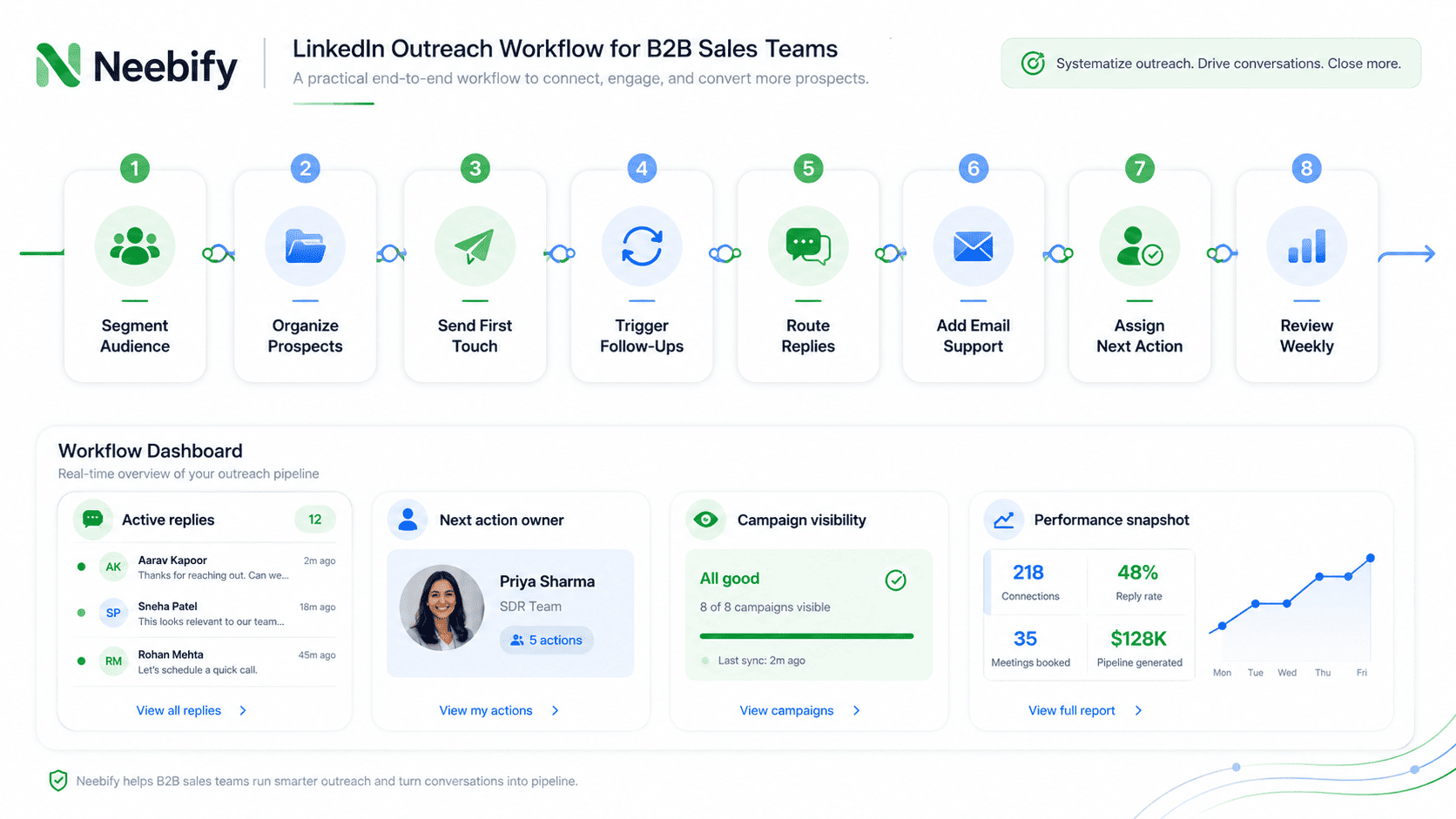
- Segment the audience
- Organize prospects with campaign context
- Send the first LinkedIn touch
- Trigger the planned follow-up sequence
- Route replies into one clear reply workflow
- Decide whether email support should be added
- Assign the next action owner
- Review campaign quality weekly
This framework works because it connects activity, follow-up, and review into one process instead of treating them as separate tasks.
Practical examples
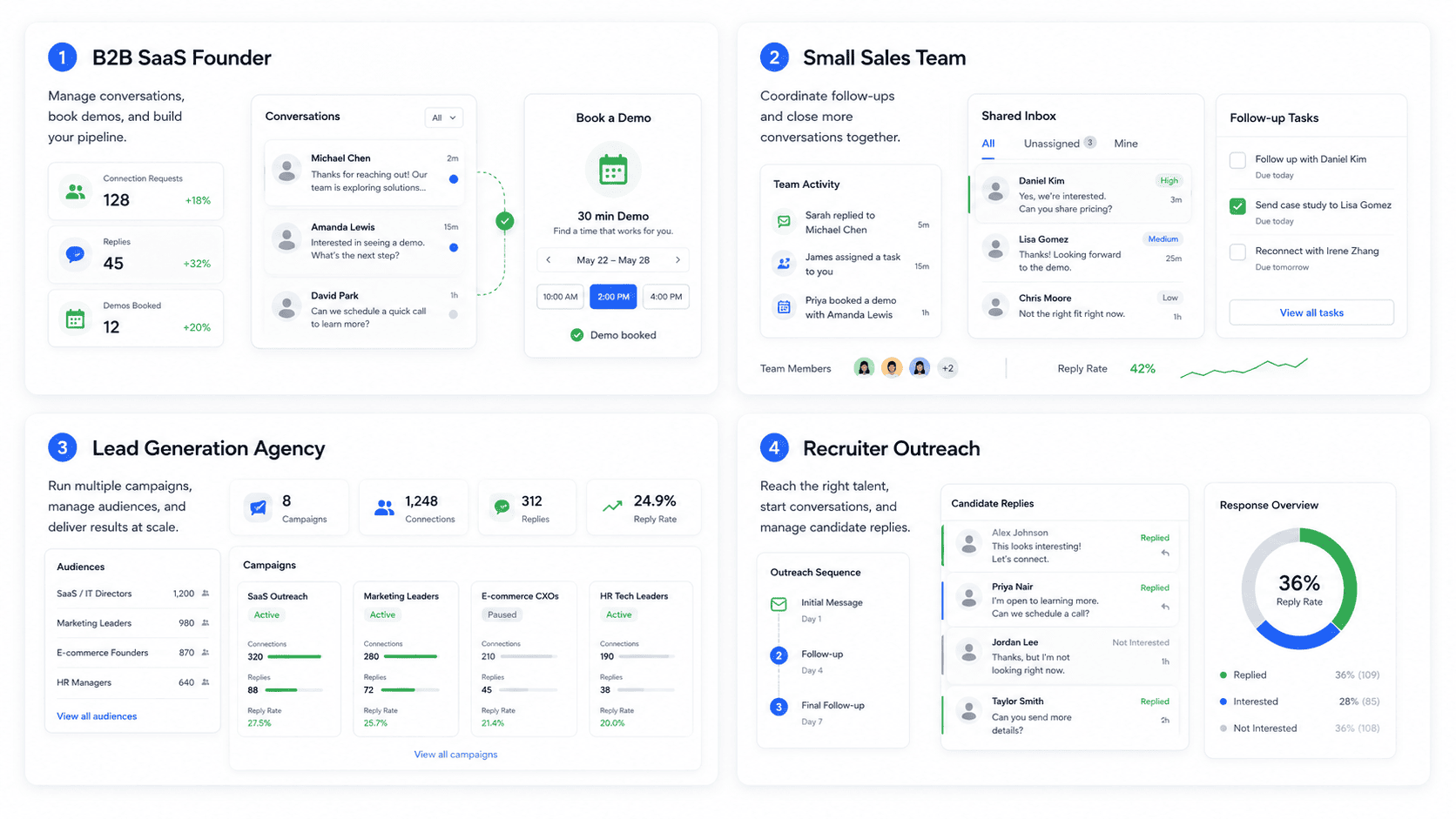
Small sales team: A small team may have two or three reps reaching different audience segments. If they share one workflow for segmentation, follow-ups, reply handling, and review, the process becomes easier to maintain. Without that structure, consistency usually drops as volume increases.
Lead generation agency: An agency may run multi-client outreach at the same time. The workflow becomes more manageable when each campaign has clear prospect segments, sequence rules, reply handling, and review checkpoints. That creates better multi-client outreach management and makes reporting easier.
Recruiter outreach workflow: A recruiter using LinkedIn to reach candidates or hiring stakeholders benefits from the same structure. Candidate replies, timing, and handoff visibility matter just as much here as they do in sales prospecting.
Where Neebify fits
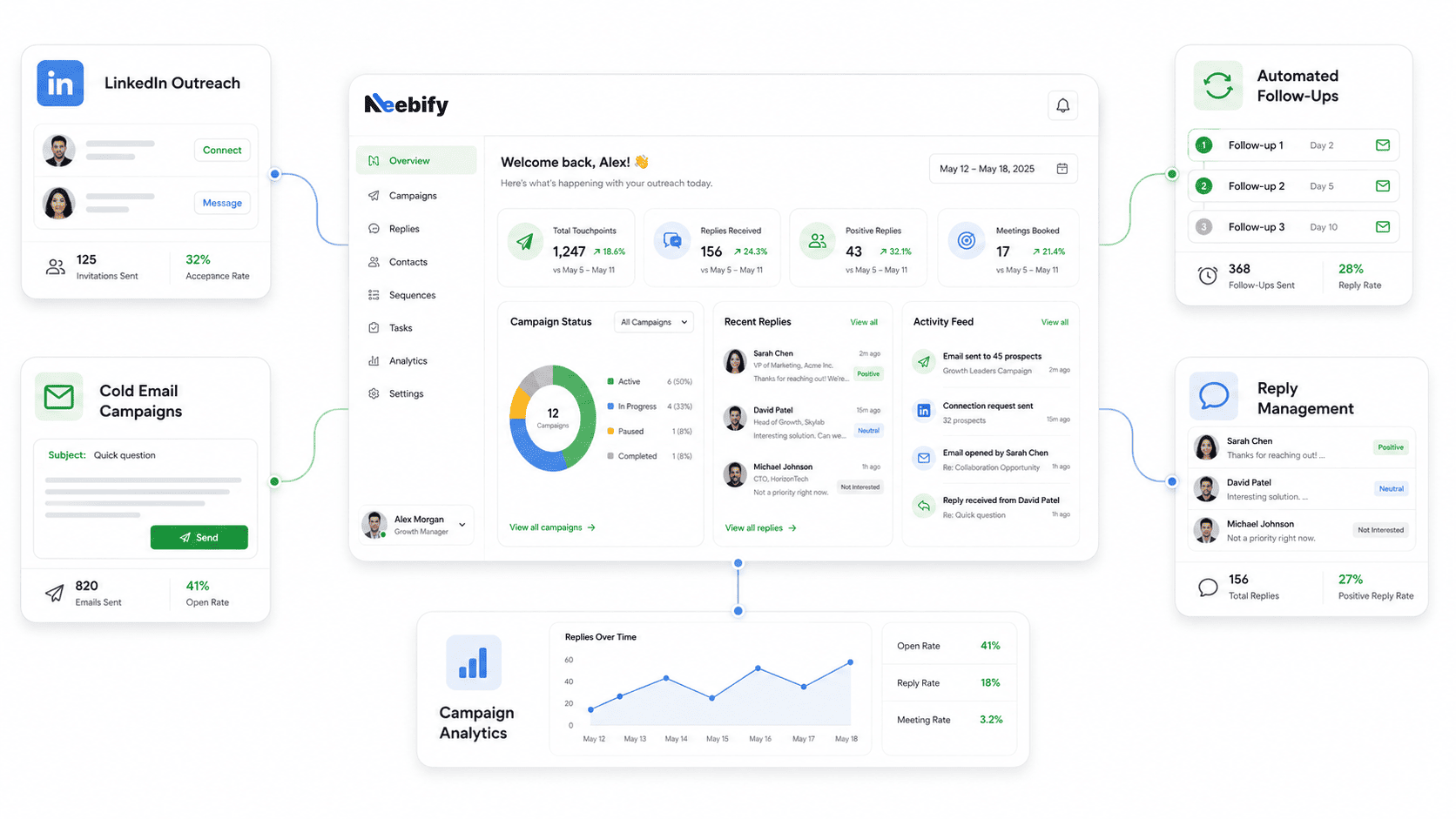
That makes it easier for B2B teams, agencies, recruiters, and founders to run a more structured prospecting workflow without depending only on spreadsheets or disconnected tools.
Instead of treating LinkedIn outreach like a separate activity, Neebify helps connect prospecting, follow-up, reply management, and review into one clearer process.
Actionable checklist
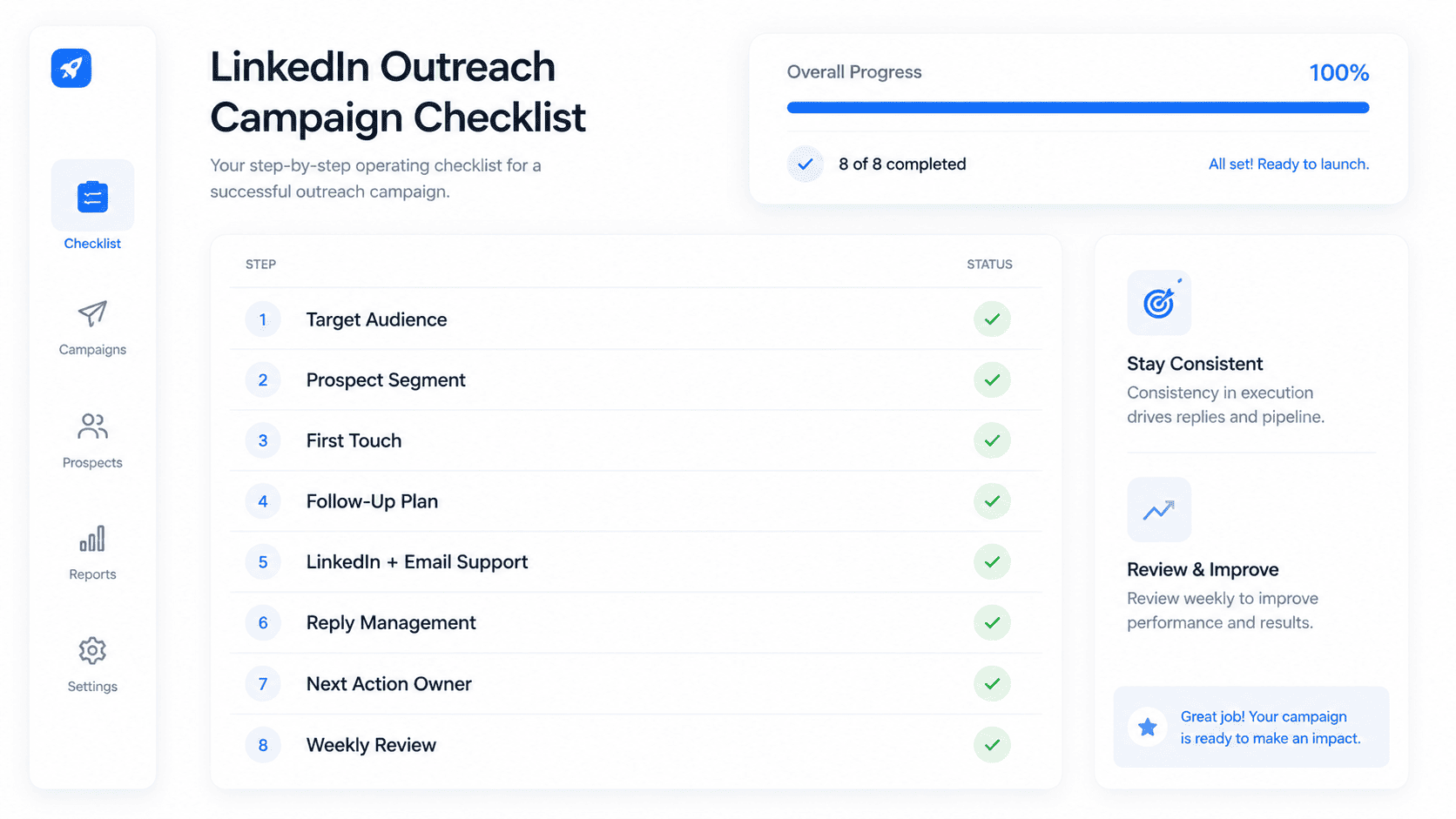
- Is the target audience clearly defined?
- Are prospects grouped by one specific segment?
- Is the first touch written for that audience?
- Are follow-up steps already planned?
- Are LinkedIn and email steps connected where needed?
- Are replies managed in one clear place?
- Is there a clear next-action owner?
- Can the team review reply quality before increasing volume?
- Is there a weekly campaign review habit?
- Does the workflow support cleaner handoff between prospecting and sales?
Conclusion
The best LinkedIn outreach workflow for B2B sales teams is not the one that sends the most activity. It is the one that makes prospecting, follow-up, reply management, and campaign review easier to manage.
When those steps are connected, the team gains better follow-up visibility, smoother outreach handoff, and more useful campaign insights.
That is where Neebify can help. If your team wants a cleaner LinkedIn outreach workflow with better reply visibility and more structured follow-up management, Neebify is worth reviewing.
CEO Notes
Useful because it addresses a high-intent workflow problem in plain business language, gives teams a practical structure they can apply, and positions Neebify as the system that connects LinkedIn outreach, follow-ups, replies, and campaign visibility.